- Nasarawa–Oweto–Otukpo Road collapse disrupts movement across Benue
- ₦38bn federal road fails less than three years after commissioning
- Collapsed sections and erosion make major stretches impassable
- Road users abandon route over safety and construction concerns
Barely three years after the Nasarawa–Oweto–Otukpo Road was commissioned at the cost of ₦38 billion, the federal highway in Benue State has suffered widespread structural failure, sparking serious questions about project quality, supervision, and accountability.
Once hailed as a major boost to regional trade and mobility, the Nasarawa–Oweto–Otukpo Road is now in a state of near-total collapse.
ATTENTION: Click “HERE” to join our WhatsApp group and receive News updates directly on your WhatsApp!
The highway, commissioned by former President Muhammadu Buhari, was designed to link Nasarawa State, Oweto, Agatu, and Otukpo, creating a faster route between Benue and Nigeria’s eastern corridor.
However, a recent on-the-ground assessment by journalists revealed a different reality.
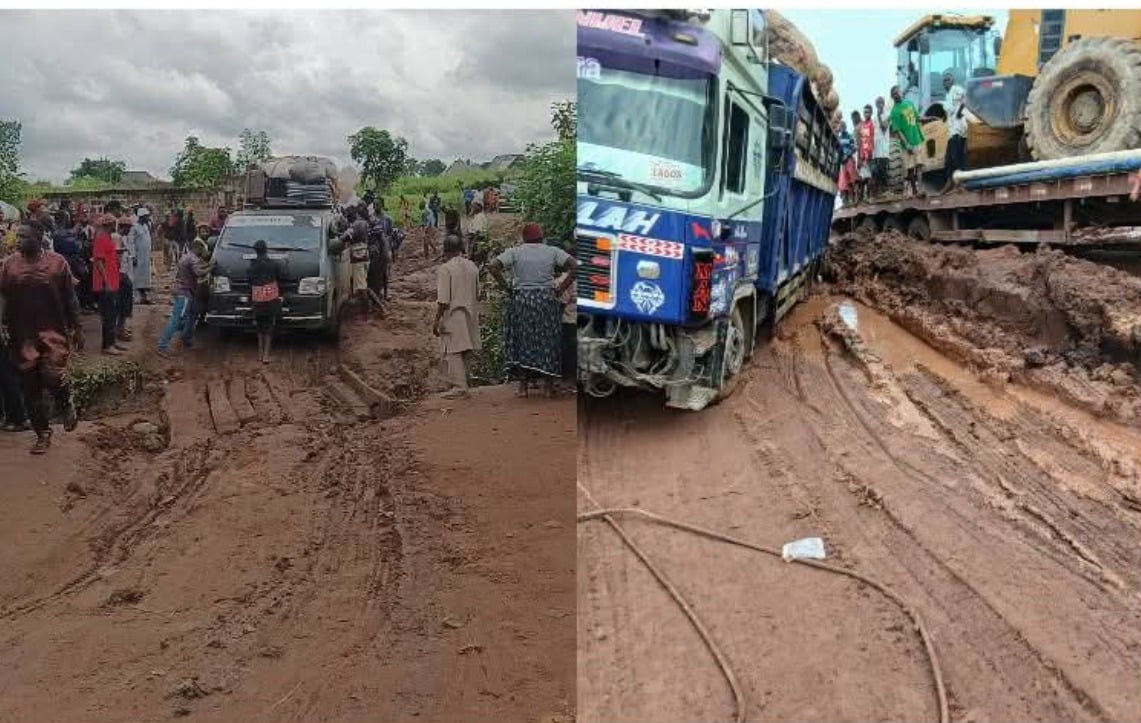
Large sections of the road have caved in, with asphalt stripped off the surface, shoulders collapsing, and erosion carving deep channels across the carriageway. In several areas, motorists are forced to drive through nearby bushes to bypass damaged spots, while other stretches are completely impassable.
The situation is particularly severe between Agatu and Otukpo, as well as from Oweto towards Nasarawa, where traffic has virtually disappeared. What was once a busy transport corridor now sits largely abandoned.
Several culverts along the route were found exposed or badly damaged, raising fresh concerns about drainage design and construction standards.
A local commercial driver lamented the state of the road, saying:
“This road was supposed to make our lives easier, but now it’s more dangerous than the old routes. Many of us have stopped using it completely.”
Despite the road’s economic importance, there has been little visible intervention, leaving residents and traders to bear the consequences of what many describe as a failed federal project.
For publication of Press Releases, Statements, and Advert Inquiries, send an email to info@dailyreport.ng