
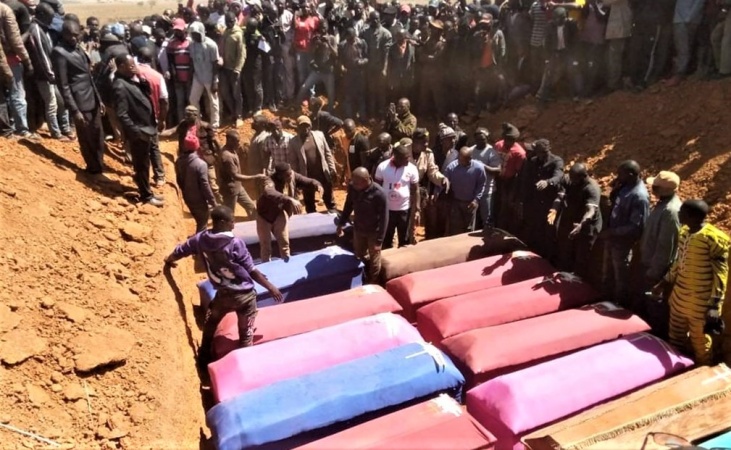
- Nearly 12,000 people lost their lives in Plateau State between 2001 and 2025
- Attacks affected over 420 communities across 13 local government areas
- More than 35 churches destroyed and 33 pastors killed
- Senate warns Nigeria faces deeper insecurity without urgent reforms
Stakeholders from Nigeria’s North-Central region have raised alarm over what they described as long-standing and coordinated violence in Plateau State, which they say has claimed 11,749 lives between 2001 and 2025.
The revelation was contained in a Senate report presented by the Senate Leader, Opeyemi Bamidele, during a plenary session last week. The report was based on documentary evidence submitted by affected communities and civil groups.
ATTENTION: Click “HERE” to join our WhatsApp group and receive News updates directly on your WhatsApp!
According to the report, 420 communities across 13 local government areas were attacked within the period, while 25,528 households were displaced. It also revealed that over 136 communities have been abandoned, with new settlers occupying and renaming them.
More troubling, the report stated that more than 35 churches were destroyed and 33 pastors were murdered, pointing to the heavy toll the violence has taken on religious and social life in the state.
“This is not merely farmer-herder conflict,” stakeholders told the Senate.
“It is a systematic attempt to wipe out indigenous Plateau communities through organised violence and territorial takeover.”
The hearing also heard accounts of repeated night attacks by gunmen, leading to mass killings, destruction of homes, and forced displacement of residents.
READY ALSO: US Lawmaker Raises Alarm Over ISIS Threats Against Christians in Nigeria
Stakeholders further warned that insecurity in Plateau and other regions is being sustained by financiers, arms suppliers, and foreign fighters operating across the North-Central, North-East, and North-West.
They described Boko Haram, bandits, and armed Fulani groups as a “triumvirate of evil,” calling on authorities to trace and seize their funding sources.
Participants urged the Federal Government to set up an Independent Commission of Inquiry to investigate allegations of genocide and ethnic persecution. They also renewed calls for state police, arguing that governors are called chief security officers without real control over security forces.
“This imbalance explains why communities remain exposed,” stakeholders said.
They also called for constitutional recognition of traditional rulers, saying their exclusion has weakened local conflict resolution.
While condemning criminal violence, stakeholders noted that many Fulani communities in Plateau have lived peacefully for decades, warning against broad stereotyping.
To prevent further bloodshed, they recommended strengthening local vigilante groups, saying locals understand the terrain better than external forces.
The hearing ended with a strong call for a centralised, intelligence-driven security system and improved cooperation with neighbouring countries to stop cross-border crimes.