
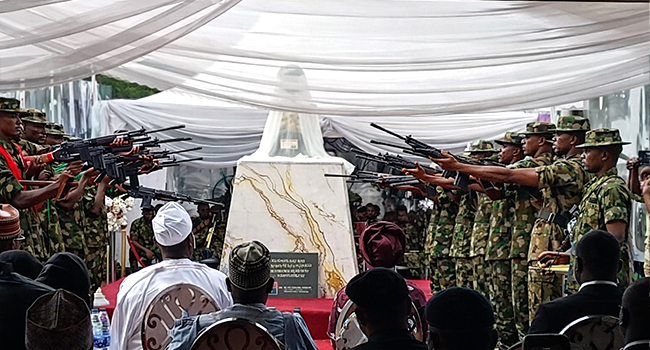
- Murtala Muhammed legacy remembered by top Nigerian leaders
- Political and diplomatic dignitaries gather in Abuja
- Anti-corruption reforms praised decades later
- Short but bold leadership still shapes Nigeria
Dignitaries from across Nigeria’s political and diplomatic space on Thursday gathered in Abuja to honour the legacy of Murtala Muhammed, the late former Head of State whose brief time in office continues to shape Nigeria’s political history.
The remembrance ceremony was held at the Murtala Muhammed Arcade, drawing senior government officials, foreign diplomats, and public figures who came together to reflect on the former leader’s enduring impact.
ATTENTION: Click “HERE” to join our WhatsApp group and receive News updates directly on your WhatsApp!
President Bola Tinubu was represented at the event by the Secretary to the Government of the Federation, George Akume, who described Muhammed as a leader whose courage and discipline redefined governance in Nigeria.
Also present was former Chief of Staff to ex-President Muhammadu Buhari, Ibrahim Gambari, alongside the Ambassador of Angola and other members of the diplomatic community.
Organisers said the event was convened to reflect on what they described as General Muhammed’s “brief but very remarkable” leadership, noting that his administration stood out for its firm anti-corruption drive, swift reforms, and commitment to restoring discipline in public service.
“General Murtala Muhammed showed that leadership is not about how long you stay in power, but about the courage to do what is right,” one speaker said during the ceremony.
Muhammed ruled Nigeria from 1975 until his assassination on February 13, 1976, barely six months after assuming office. Despite his short 200-day tenure, he introduced sweeping changes, including the dismissal of thousands of corrupt public officials, the creation of seven new states, and the initiation of plans for a return to civilian rule.
His administration also began the process that eventually led to the relocation of Nigeria’s capital from Lagos to Abuja, a decision that continues to shape the country’s political and administrative structure today.