-
Adelabu admits blackout has worsened hardship nationwide
-
Two-week timeline: Government promises noticeable improvement in electricity supply
-
Gas supply issues: Pipeline repairs and supplier constraints blamed for disruption
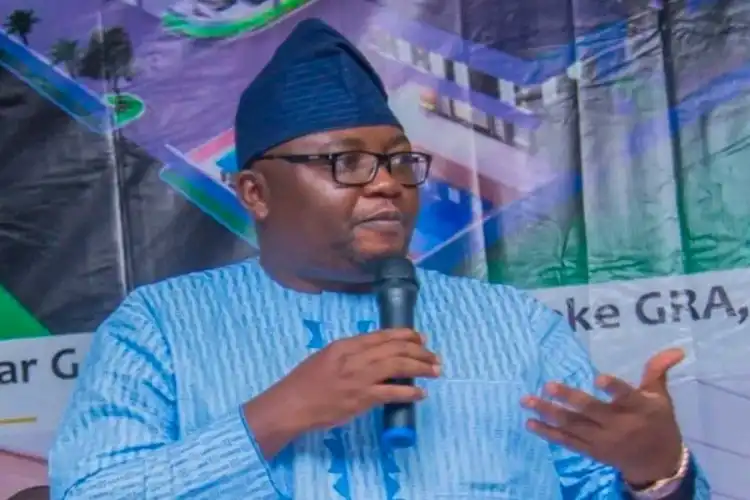
Nigeria’s Minister of Power, Adebayo Adelabu, has apologised to Nigerians over persistent electricity outages, acknowledging the severe impact on homes, businesses and industries across the country.
Speaking at a press conference in Abuja, the minister admitted the situation has been difficult, especially amid rising temperatures. “I want to apologise to Nigerians, officially now, coming from me as the Minister of Power, for this temporary issue that is leading to hardship being experienced, especially during this dry season, where there is so much heat everywhere,” he said.
Adelabu noted that the outages have disrupted economic and social activities. “Businesses are being affected, schools have been affected, and industries have been affected. It is not our wish to find ourselves in this situation, but it is due to some factors that are actually beyond our control,” he added.
ATTENTION: Click “HERE” to join our WhatsApp group and receive News updates directly on your WhatsApp!
Despite the challenges, the minister assured citizens that improvements would soon be visible.
“Two weeks from now, we should start seeing improvements in supply. Two weeks,” he stated, citing ongoing repairs of gas pipelines and commitments from gas suppliers.
He explained that disruptions in gas supply—particularly involving facilities operated by Seplat Energy—have significantly affected power generation. According to him, a special committee has been set up to ensure compliance with domestic gas supply obligations to power plants.
“We already have a committee that is working on this to track compliance with the domestic supply obligations of these gas companies to our power plants,” Adelabu said, adding that improved payment systems would also encourage steady supply.
The minister reaffirmed the Federal Government’s target to increase electricity generation to 6,000 megawatts before the end of 2026.
“Power generation will improve, transmission will improve, distribution will improve, and that 6,000 megawatts will be achieved before the end of this year,” he assured.
He emphasised that the current disruption is temporary, stressing government commitment to surpass previous performance levels.
“We are working on it 24/7 to make sure that we go back to the trajectory of 2025… we are willing to do more, to even do better,” he said.
Nigeria’s power sector continues to face longstanding challenges, including inadequate gas supply, ageing infrastructure, and liquidity constraints across the value chain.
For publication of Press Releases, Statements, and Advert Inquiries, send an email to info@dailyreport.ng