-
Senate removes “real-time” transmission clause to prevent election disruption, Akpabio says
-
Concerns raised over network, power failures and nationwide coverage
-
ADC, David Mark insist INEC should decide transmission method, not lawmakers
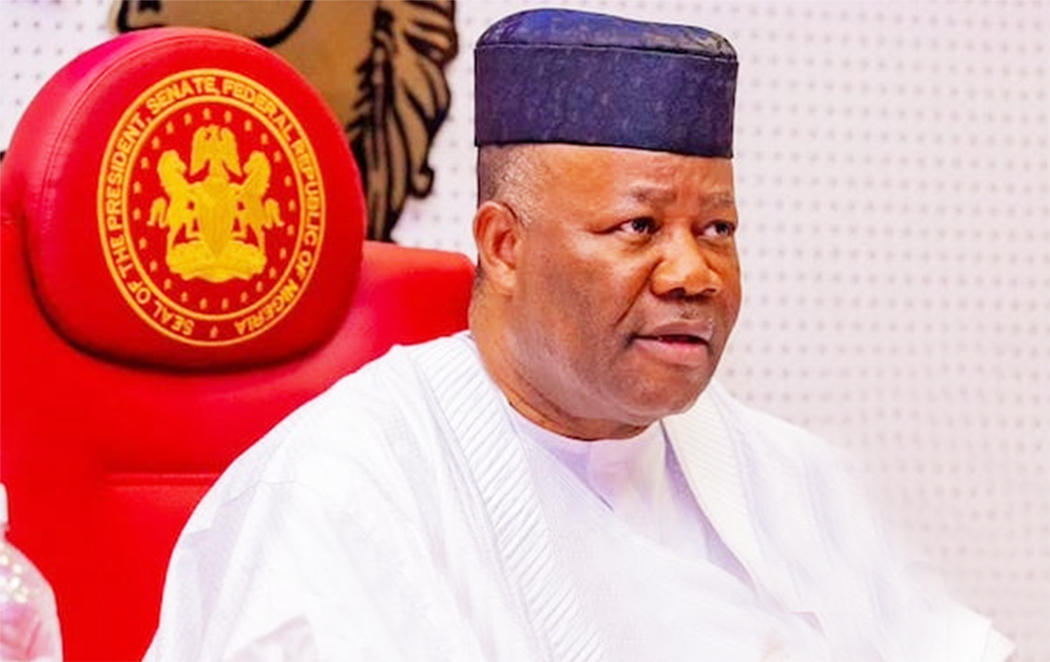
President of the Senate, Godswill Akpabio, has confirmed that the National Assembly deliberately removed the provision mandating “real-time” electronic transmission of election results from the 2026 Electoral Bill, citing concerns over national stability and technological reliability.
Akpabio disclosed this on Saturday in Abuja while speaking at the unveiling of a book titled The Burden of Legislators in Nigeria, authored by Senator Effiong Bob.
ATTENTION: Click “HERE” to join our WhatsApp group and receive News updates directly on your WhatsApp!
According to the Senate President, lawmakers agreed to delete the phrase “real-time” from the bill to ensure that technology supports, rather than threatens, Nigeria’s democratic process.
He explained that making real-time transmission compulsory could plunge the country into confusion if elections were conducted in areas affected by network failure or power outages.
Akpabio argued that official election documents, including Form EC8A, remain the most dependable basis for declaring results, stressing that flexibility must be allowed for the Independent National Electoral Commission (INEC) to determine the most practical mode of result transmission.
“All we did was remove the word ‘real-time’ so that INEC can decide the appropriate method. If it is made mandatory and the system fails, it will create serious problems,” he said.
He further questioned whether elections would be cancelled in states without internet connectivity or during a national grid collapse, insisting such scenarios justified the Senate’s decision.
Responding to criticism from opposition parties, civil society groups and non-governmental organisations, Akpabio said the Senate would not be pressured into passing laws that could destabilise the country.
He criticised some NGOs for assuming that ideas discussed during legislative retreats must automatically become law, noting that lawmaking requires broader national considerations.
“The Senate will do what is right for Nigeria, not what one organisation insists on. A retreat is not law-making,” he said.
Despite his firm defence, Akpabio said the legislative process was not yet concluded, adding that amendments could still be made before the final approval of the Votes and Proceedings.
He explained that any senator could propose changes as long as the official records of the sitting had not been adopted.
“The process is not complete. When the Votes and Proceedings are brought out, amendments can still be made if the majority supports them,” he stated.
However, former Senate President and current National Chairman of the African Democratic Congress (ADC), Senator David Mark, cautioned Akpabio against speaking on behalf of INEC.
Mark insisted that the Electoral Bill should retain provisions for electronic transmission while leaving the implementation entirely to the electoral umpire.
“The position of the ADC is simple: pass the law and allow INEC to decide how it will implement electronic transmission. Do not speak for INEC,” he said.
Other speakers at the event, including Akwa Ibom State Governor, Pastor Umo Eno, and book reviewer Professor Maxwell Gidado, commended Senator Bob for highlighting the pressures faced by legislator.
In his remarks, Bob listed electoral disputes, clashes with political godfathers, court rulings, constituency pressures and personal sacrifices as some of the major challenges confronting lawmakers.
“The defence of democracy rests heavily on the legislature and its members,” the author said.
For publication of Press Releases, Statements, and Advert Inquiries, send an email to info@dailyreport.ng