
-
Prosecution witness alleges $6.23m cash withdrawal from CBN using forged approvals
-
Witness links withdrawal to election-related expenses, says documents were fraudulent
-
Court hears how cash was allegedly shared after withdrawal from Garki branch
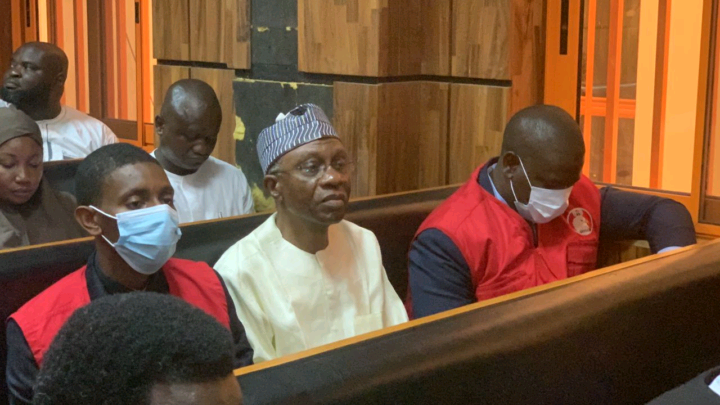
A prosecution witness in the ongoing trial of former Central Bank of Nigeria (CBN) Governor, Godwin Emefiele, has told an FCT High Court in Abuja that $6.23 million was withdrawn from the apex bank with forged documents.
The witness, Bashirudden Maishanu, an assistant director at the CBN and the 11th prosecution witness, gave the testimony on Thursday while being led in evidence by EFCC Director of Public Prosecutions, Rotimi Oyedepo.
ATTENTION: Click “HERE” to join our WhatsApp group and receive News updates directly on your WhatsApp!
Maishanu told the court that the cash withdrawal was carried out on February 8, 2023, at the Garki branch of the CBN, following representations made by one Alhaji Ahmed, who claimed to be working with a special committee linked to the Office of the Secretary to the Government of the Federation (SGF).
According to the witness, Ahmed said he was acting on the instruction of Eric Ocheme, identified as Emefiele’s personal assistant at the time, and claimed that presidential approval had been secured for the transaction.
Maishanu said Ahmed insisted that the funds be paid in cash, adding that he was asked to accompany the transaction or nominate someone else to do so.
READ ALSO: Naira Redesign Trial: Court Fixes 10 Days To Wrap Up EFCC Case Against Emefiele
He told the court that after the withdrawal, $2.5 million was allegedly taken away by Ahmed, while another $2.5 million was left with him and two others, describing the development as “outrageous”.
The witness further stated that the funds were allegedly meant for election-related expenses, including payments to election observers.
Under cross-examination, Maishanu admitted that he did not personally sight the approval but insisted that the documents used for the withdrawal were fraudulent, noting that the CBN operates strict internal processes for cash transactions of such magnitude.
He added that all officials involved in the transaction could be traced through internal documentation, stressing that each stage of the process carries identifiable signatures.
Maishanu also told the court that he was not disciplined by the CBN over the matter, adding that he later discovered the documents were forged and described the entire transaction as a “set-up.”
The presiding judge, Justice Hamza Muazu, subsequently adjourned the case until January 30, 2026, for continuation of the trial.