
-
FEC approves ₦58.47 trillion as Nigeria’s proposed 2026 budget
-
Non-oil revenue projected to contribute two-thirds of total earnings
-
Spending prioritises debt service, wages, pensions and ongoing projects
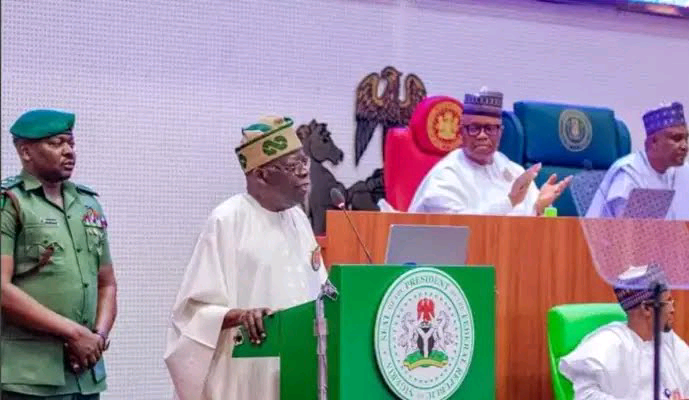
The Federal Executive Council (FEC) has approved a ₦58.47 trillion budget proposal for the 2026 fiscal year, clearing the way for its presentation to the National Assembly by President Bola Ahmed Tinubu.
Full Sto
ATTENTION: Click “HERE” to join our WhatsApp group and receive News updates directly on your WhatsApp!
Briefing journalists after the FEC meeting held on Friday at the Presidential Villa, Abuja, the Director-General of the Budget Office of the Federation, Mr Tanimu Yakubu, confirmed the approval of the proposed 2026 spending plan.
Yakubu explained that the budget was considered alongside a review of the 2026–2028 Medium-Term Expenditure Framework (MTEF) and Fiscal Strategy Paper (FSP). According to him, the total retained revenue for 2026 is projected at ₦34.33 trillion.
He noted that the aggregate expenditure for the 2026 fiscal year represents about a six per cent increase over the 2025 budget estimate. This includes projected spending by government-owned enterprises amounting to ₦4.98 trillion, as well as ₦1.37 trillion earmarked for grants and donor-funded projects.
The approved spending framework also makes provision for statutory transfers estimated at ₦4.1 trillion and debt servicing obligations of ₦15.52 trillion, including allocations to the sinking fund for retiring maturing domestic debts.
Personnel costs, including pensions, are projected at ₦10.75 trillion, reflecting a seven per cent increase compared to the 2025 provision. Overhead costs are estimated at ₦2.22 trillion.
Yakubu said the 2026 budget was designed to strike a balance between economic stabilisation and development priorities within the medium-term fiscal framework.
He added that the revenue assumptions were conservative, particularly with regard to oil prices, exchange rates and dividends from government-owned enterprises.
According to him, although total revenues are projected to decline year-on-year, non-oil revenues now account for nearly two-thirds of government income, signalling a gradual shift away from dependence on crude oil.
READ ALSO: Carter Efe Becomes Africa’s Most Followed Twitch Streamer After Record-Breaking Livestream With Davido
He explained that expenditure growth is largely driven by rising debt service obligations, wages and pensions, rather than expansive discretionary spending. Capital expenditure has been slightly reduced to prioritise the completion of ongoing projects and ensure value for money.
Earlier, the Minister of Budget and Economic Planning, Senator Abubakar Bagudu, confirmed that FEC approved both amendments to the MTEF and the 2026 budget proposal, including a downward revision of the exchange rate assumption from ₦1,512 to ₦1,400 per dollar.
The Minister of Information and National Orientation, Alhaji Mohammed Idris, said the meeting was convened primarily to deliberate on and approve the 2026 budget for onward transmission to the National Assembly.