
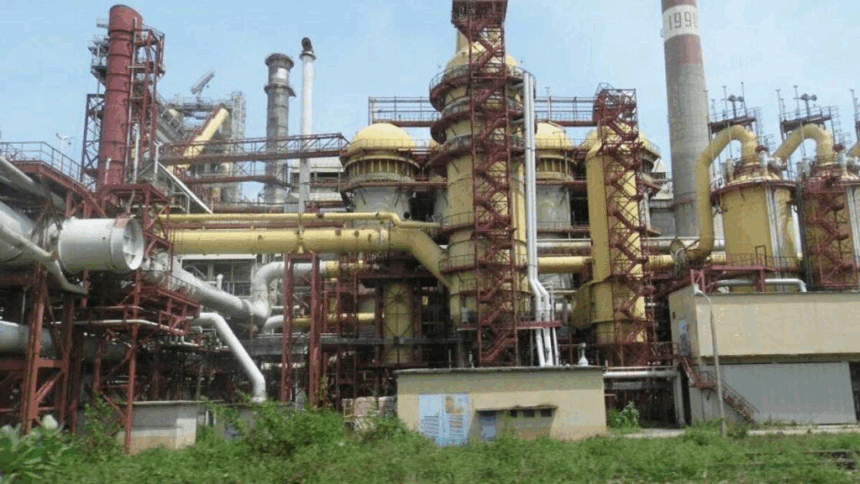
• FG allocates ₦6.04bn personnel cost to Ajaokuta Steel in 2026 budget
• Over 90% of allocation goes to salaries, with steel production still at zero
ATTENTION: Click “HERE” to join our WhatsApp group and receive News updates directly on your WhatsApp!
• Capital spending remains below 7%, raising concerns over stalled revival
The Federal Government has proposed a ₦6.04 billion personnel cost allocation for Ajaokuta Steel Company Limited in the 2026 fiscal year, despite the steel plant remaining non-operational more than four decades after its conception.
Figures contained in the 2026 Appropriation Bill show that Ajaokuta was allotted a total of ₦6.69 billion for the year, with staff salaries, allowances, and statutory contributions accounting for about 90.4 per cent of the entire budget.
The breakdown indicates that ₦4.79 billion is earmarked for salaries and wages, while ₦1.25 billion is allocated to allowances and social contributions.
These include ₦479.42 million for pension contributions, ₦239.71 million for NHIS payments, ₦59.82 million for employee compensation insurance, and ₦468.9 million for regular allowances.
Budget analysis reveals a sharp imbalance between recurrent and capital expenditure. Total recurrent spending stands at ₦6.28 billion, while capital expenditure is limited to ₦410.8 million—less than seven per cent of the total allocation.
Capital votes are spread across relatively minor items, including ₦56.4 million for fixed assets such as computers and security equipment, ₦129.2 million for construction and provision of facilities, and ₦225.2 million for rehabilitation and repairs, mainly electricity and office-related works.
The figures highlight limited investment in reviving the steel complex, originally designed to drive Nigeria’s industrialisation and manufacturing value chain.
Year-on-year budget trends suggest continuity rather than reform. Personnel costs rose from ₦4.29 billion in 2024 to ₦6.21 billion in 2025, a 44.8 per cent increase despite zero production. The proposed ₦6.04 billion for 2026 represents only a marginal 2.7 per cent reduction.
The budget also shows that Ajaokuta is projected to generate zero independent revenue in 2026 and will rely entirely on federal subventions. The company is not expected to receive grants during the fiscal year.
READ ALSO: FG bans graduation for non-final classes, mandates reusable textbooks
Despite its non-operational status, Ajaokuta continues to feature in constituency-style capital projects such as solar street lighting, water facilities, road repairs, and community grants, which are not directly linked to steel production.
Separately, the Federal Ministry of Steel Development proposed ₦150.99 million for revitalisation activities for Ajaokuta Steel and the National Iron Ore Mining Company, alongside ₦1.06 billion for project preparation, including feasibility studies, environmental assessments, and financial modelling.
These provisions are lower than 2025 allocations, reflecting a 56 per cent drop in project preparation spending year-on-year.
Conceived in 1979 as Nigeria’s flagship steel project, Ajaokuta was expected to reduce steel imports and stimulate economic diversification.
More than 40 years later, the 2026 budget once again portrays the complex as a payroll-dependent enterprise, with revival efforts still largely confined to studies rather than production.