
- FG bans site closures on major highways during the yuletide
- Abuja–Lokoja gridlock prompts urgent directive from Works Ministry
- NNPCL to pay ₦263bn owed to road contractors
- Over ₦2.13tr debt under verification before full payment begins
The Federal Government has ordered road contractors handling key highways across Nigeria to remain on their sites throughout the yuletide season, as part of efforts to ease traffic congestion and prevent a repeat of recent gridlocks on major routes.
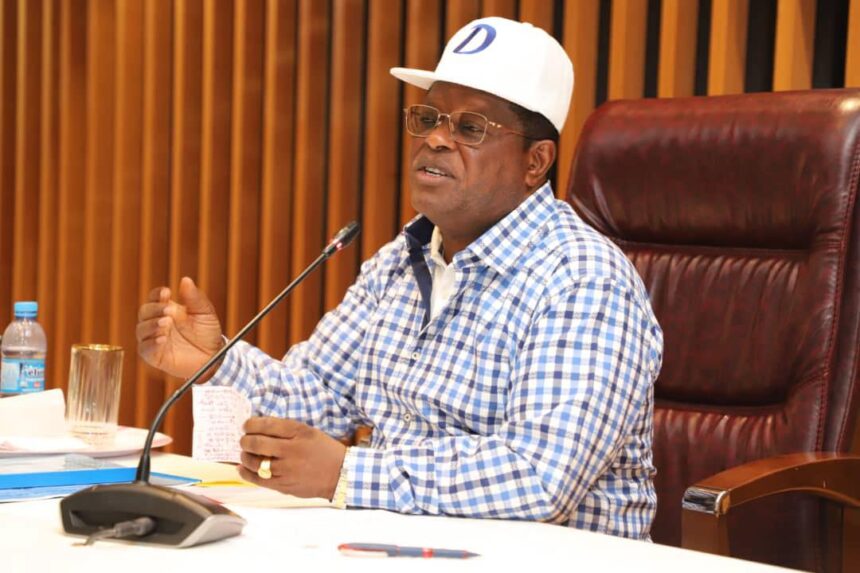
Minister of Works, David Umahi, issued the directive in Abuja, warning that contractors working on critical roads such as the Abuja–Lokoja, Abuja–Kano, Lagos–Port Harcourt, Keffi–Makurdi, Enugu–Onitsha, and Sokoto–Zamfara expressways must not shut down operations without approval from the ministry.
ATTENTION: Click “HERE” to join our WhatsApp group and receive News updates directly on your WhatsApp!
Umahi said the order became necessary following the severe traffic jam on the Abuja–Lokoja expressway, where thousands of travellers were stranded for hours during the yuletide after a standoff involving truck drivers and security personnel.
“I plead with you to free the roads. We were thoroughly embarrassed by what happened on the Abuja–Lokoja road, and we do not want a repeat,” the minister told contractors.
He also disclosed that President Bola Ahmed Tinubu had directed the Nigerian National Petroleum Company Limited (NNPCL) to pay ₦263 billion owed to contractors, adding that total outstanding debts from 2023 to date stood at ₦2.13 trillion.
READ ALSO: Budget Crisis: NASS Extends 2025 Fiscal Year to March 2026
According to Umahi, payments will only begin after contractors exit all previous agreements, including NNPCL tax credit arrangements, and submit verifiable evidence of claims.
“Each contractor being owed must come with proof. We need to confirm the figures before payments commence,” he said.
On inherited NNPCL road projects, Umahi explained that while all projects would continue, future payments will now be handled by the Ministry of Works, not NNPCL. He added that from January 2026, senior directors would be deployed directly to project sites to strengthen supervision.
“Our biggest challenge is weak supervision. From January 7, 2026, every senior director will be in the field. If you are not digitalised, you will be removed,” the minister warned.