
-
Ex-President Obasanjo says he still cannot confirm his true age.
-
Reveals six surviving classmates are all above 90, offering clues.
-
Explains why he created presidential library to preserve national records
Former President Olusegun Obasanjo has restated that he still does not know his actual age, noting that he relies on the ages of his surviving primary and secondary school classmates to estimate it.
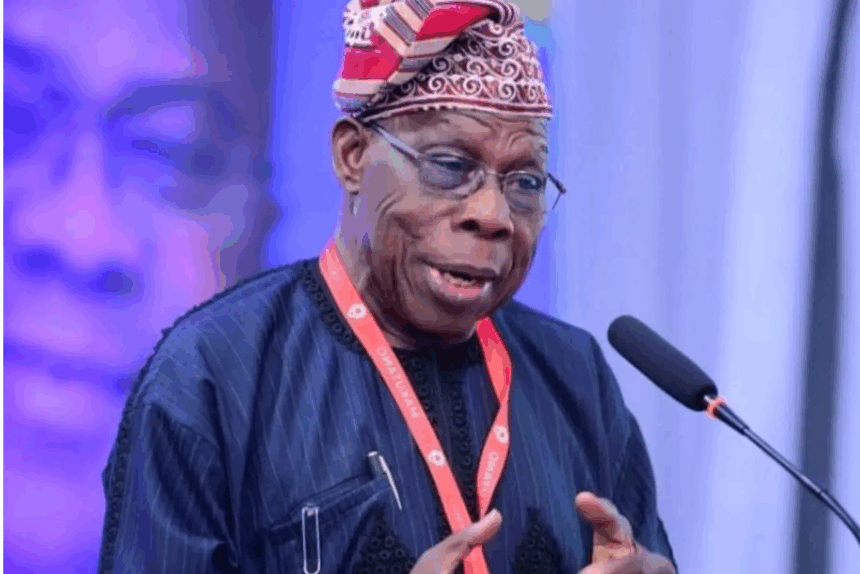
He made the disclosure on Sunday during the Toyin Falola Interviews series titled “A Conversation with His Excellency, Chief Olusegun Obasanjo.”
ATTENTION: Click “HERE” to join our WhatsApp group and receive News updates directly on your WhatsApp!
The session was anchored by historian Toyin Falola, with Bishop Matthew Kukah and former presidential candidate Kingsley Moghalu also participating.
Obasanjo explained that six of his known classmates are still alive, and none is younger than 90, suggesting that his own age is likely within the same range.
“I don’t know my exact age, but I can judge from those who were in school with me,” he said, citing the Olubara of Ibara, Oba Jacob Olufemi Omolade, as one of them.
The former President also spoke extensively about the Olusegun Obasanjo Presidential Library, saying he established it to preserve documents, institutional memory, and historical materials that risk being lost in Nigeria’s poorly maintained archival culture.
He disclosed that more than three million materials have already been digitised, with another three million awaiting digitisation.
READ ALSO: Don’t Be Scared of Coming Home This Christmas, Your Safety is Assured – IPOB Tells Ndigbo
“The idea is simple: preserve the past, take note of the present, and inspire the future,” he said.
Obasanjo added that the library holds his primary and secondary school records, personal letters—including one written to the late military ruler Sani Abacha after his son’s death—and manuscripts of books he worked on during his prison years. Even crops he planted while incarcerated, he said, have been preserved as part of the archive.
He emphasised that the institution was created to correct Nigeria’s weak culture of documentation.
“In our society, we don’t keep records well. Institutional memory is not what we do very well,” he noted.