
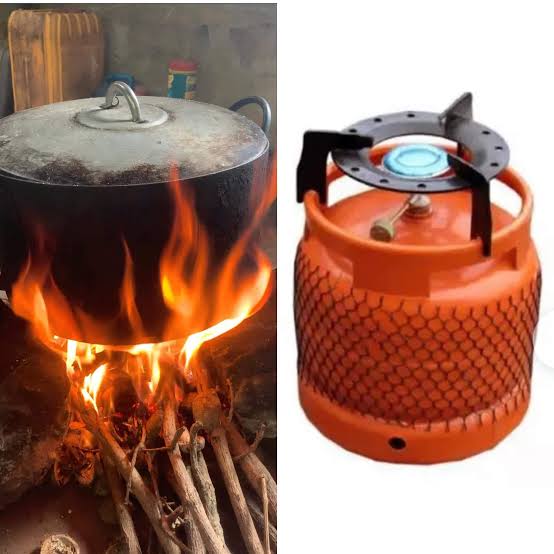
- Over 20 million households still cook with firewood and charcoal
- High LPG prices push families back to biomass fuels
- FG targets five million cylinder distribution by 2030
- Deforestation worsens as clean cooking adoption stalls
More than 20 million Nigerian households continue to depend on firewood and charcoal for cooking, as the rising cost of cooking gas (LPG) keeps clean energy out of reach for millions, despite increased local production and years of government policy support.
Findings show that affordability challenges, weak distribution networks and the rising cost of LPG equipment have slowed Nigeria’s transition to clean cooking, forcing many families to abandon gas and return to biomass fuels.
ATTENTION: Click “HERE” to join our WhatsApp group and receive News updates directly on your WhatsApp!
Although over 1.5 million households have adopted LPG in the last decade, marketers estimate that a far larger number, mostly in rural and peri-urban areas still rely on firewood and charcoal due to poverty and limited access to gas retail outlets.
Nigeria’s LPG consumption has grown from about 250,000 metric tonnes in 2014 to roughly 1.5 million tonnes in 2024, but this remains far below the federal government’s target of five to six million tonnes annually, now shifted to 2030.
Per capita LPG use stands at just seven kilogrammes per year, compared to a global average of 25–30 kilogrammes, highlighting the country’s deep clean-cooking gap.
READ ALSO: Tinubu Set to Launch Unemployment Benefits Scheme — Deputy Speaker
The Federal Government insists it is working to reverse the trend. Under the National Gas Expansion Programme and the Decade of Gas initiative, authorities plan to distribute millions of LPG cylinders to vulnerable households.
The Coordinating Director of the Decade of Gas Secretariat, Ed Ubong, said rollout ceremonies have been completed nationwide, with full implementation expected to begin in 2026.
“The target is to reach one million households yearly, with five million homes covered by 2030,” Ubong said.
However, industry operators warn that the programme may struggle unless affordability is addressed. As of November 2025, LPG retail prices ranged from ₦950 to ₦1,500 per kilogramme, putting the cost of refilling a 12.5kg cylinder between ₦12,500 and ₦15,000. Cylinder purchase now averages ₦80,000, well above the minimum wage.
Managing Director of Selai Gas, Damilola Owolabi-Osinusi, described cylinder acquisition as the biggest obstacle.
“You cannot use gas without a cylinder, yet a standard cylinder now sells for about ₦80,000. That is beyond the reach of millions,” she said.
She added that power costs, exchange rate volatility and imported raw materials continue to push up prices for local manufacturers.
In Bayelsa State, trader Ebi Wonodi said rising gas prices forced her back to charcoal.
“Gas is too expensive now. I don’t have a choice,” she said.
Experts warn that the shift back to biomass is worsening deforestation and health risks. Data from Global Forest Watch shows Nigeria lost 3.8 kha of tree cover between 2001 and 2024, with thousands of deforestation alerts recorded in late 2025 alone.
According to Dr Riverson Oppong, household air pollution from firewood contributes significantly to strokes and chronic diseases.
“Women and children face the highest risk, particularly in rural areas,” he said.
Despite Nigeria’s vast gas reserves of over 209 trillion cubic feet, LPG remains unaffordable for many, prompting calls for targeted subsidies, stronger rural distribution and sustained public education.