By Mr. Jude Iyalagha
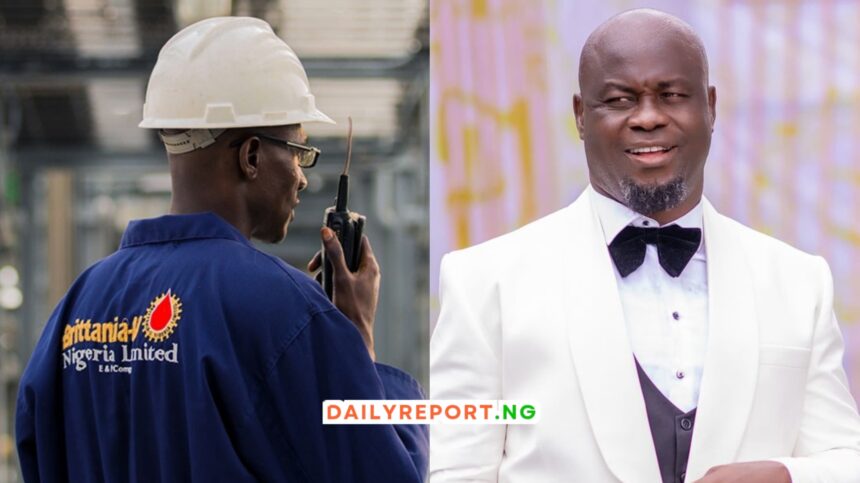
In 2007, an agreement was signed between Britannia-U Nigeria Limited and the Ogulagha Kingdom in Burutu Local Government Area of Delta State.
ATTENTION: Click “HERE” to join our WhatsApp group and receive News updates directly on your WhatsApp!
The Memorandum of Understanding, tied to operations at the Ajapa Marginal Field, was introduced as a pathway to peace, development, and shared prosperity. Nearly two decades later, many residents say the promise feels distant from their daily reality.
This investigation examines what was pledged, what may have been generated, and why many in Ogulagha Kingdom believe the structure has left them behind.
Reaching out to newsmen on behalf of the stakeholders of the Ogulagha Kingdom was Mr. Jude Iyalagha, who addressed the press on the developments and concerns surrounding the agreement and its implementation.
WHAT THE 2007 MOU PROMISED
On paper, the commitments appeared structured. In practice, they were modest even at the time.
The agreement provided:
N150,000 per community per year for drugs. With seven communities, this totaled N1.05 million annually.
Scholarships for two secondary students per community at N30,000 each, and one tertiary student at N75,000. Across the kingdom, this amounted to N945,000 yearly.
Two trainees per community at the Petroleum Training Institute in Effurun, plus a N50,000 allowance each.
A 20 percent salary incentive for science teachers.
N10,000 per sitting for kingdom committee meetings.
In 2007, these figures were considered workable. In 2026 economic terms, their value has been sharply reduced by inflation. What could once stock a modest health center today barely covers basic medication procurement.
The commitments were fixed sums. They were not indexed to oil prices, production volume, or inflation. That structural detail would later prove significant.
ESTIMATING THE SCALE OF OIL REVENUE
Marginal fields in the Niger Delta commonly produce between 3,000 and 10,000 barrels per day, depending on development phase. Using a conservative estimate of 5,000 barrels per day:
5,000 barrels x 365 days equals 1,825,000 barrels annually.
At an average price of 70 US dollars per barrel, annual gross revenue would reach about 127.75 million dollars.
At roughly N1,400 per dollar, that converts to approximately N178 billion per year in gross revenue.
Even after deducting operating costs, royalties, and taxes, the revenue scale remains in tens of billions of naira annually.
When compared to annual community commitments that may have totaled between N3 million and N5 million in 2007 value, the proportional gap becomes striking. It represents far below one percent of estimated gross revenue.
For many in Ogulagha Kingdom, that disparity is the heart of the grievance.
LIFE IN A RESOURCE RICH COMMUNITY
Ogulagha Kingdom sits in one of Africa’s most resource endowed regions. Yet residents continue to report:
Limited healthcare infrastructure
Youth unemployment
Weak road connectivity
Environmental exposure risks
Restricted access to higher education funding
For families living near oil installations and flare stacks, development is expected to mean more than small scholarship slots. Community leaders argue it should translate into modern clinics, vocational hubs, shoreline protection, potable water systems, and structured employment pipelines.
The frustration is not rooted in hostility toward investment. It is rooted in expectations of fairness.
FIXED SUMS IN A FLUCTUATING INDUSTRY
One of the most consequential features of the 2007 MOU is that benefits were not tied to production.
Whether output increases or oil prices rise, the community allocation remains unchanged on paper. There is no revenue sharing formula, no indexed development fund, no escalation clause.
Over time, inflation reduces value while oil revenue may grow. That is how inequality expands quietly, through static agreements in a dynamic industry.
ENVIRONMENTAL RISK WITHOUT A PERMANENT FUND
The agreement includes environmental cleanup obligations, yet it does not establish a pre funded restoration pool.
In oil producing communities, a spill can instantly damage fishing and farming livelihoods. Without a standing compensation structure, affected families may face prolonged delays.
For Ogulagha Kingdom, the concern is not simply what was promised, but whether the framework was strong enough to secure long term protection.
PART II
SHAREHOLDERS WITHOUT SIGHT, HOSTS WITHOUT PROPORTION
Beyond the MOU lies a more complex claim.
Leaders within Ogulagha Kingdom assert that Ogulagha Kingdom is not merely a host community but also a registered shareholder in the Ajapa Marginal Field structure, allegedly documented with Nigeria’s Corporate Affairs Commission.
If verified, this changes the conversation entirely.
Under Nigerian corporate law, shareholders are entitled to:
Notice of Annual General Meetings
Access to audited financial statements
Voting rights
Dividend entitlements where declared
Inspection of certain corporate records
Community representatives claim they have not consistently received audited accounts, production visibility, or clarity on dividend declarations.
If shareholding exists in formal filings but governance participation does not occur in practice, the issue shifts from corporate social responsibility to corporate accountability.
INFORMATION ASYMMETRY AND POWER
Oil ventures often involve layered ownership structures and technical agreements. Without access to:
Production data
Lifting schedules
Cost recovery details
Royalty payments
Dividend records
A shareholder cannot independently verify profitability or entitlement.
For Ogulagha Kingdom, the grievance is deeply emotional as well as financial. Ogulagha Kingdom hosts the asset. Ogulagha Kingdom bears environmental exposure. Ogulagha Kingdom claims equity. Yet leaders say the kingdom lacks voice in corporate decision making.
To hold shares on paper but not visibility in practice creates a sense of exclusion that goes beyond money.
THE PETROLEUM INDUSTRY ACT CONTEXT
The introduction of the Petroleum Industry Act has reshaped host community structures in Nigeria, establishing more defined trust mechanisms and governance expectations.
Agreements signed before this reform may now appear outdated when measured against current standards.
What was acceptable in 2007 may not meet transparency and proportionality expectations in 2026.
As of the time of filing this report, repeated efforts to reach the management of Britannia-U Nigeria Limited for their official response were unsuccessful. The company’s perspective is important to a balanced account, and we remain open to engaging with its representatives. Should Britannia-U provide clarifications or counterpositions, they will be duly reflected in subsequent updates to this report.
THE CORE QUESTION
This is not a story of confrontation. It is a story of proportionality and dignity.
If Ogulagha Kingdom is only a host community, then the fairness of its MOU must be assessed against production scale.
If Ogulagha Kingdom is also a registered shareholder, then transparency is not optional. It is a statutory obligation.
Oil is finite. Communities endure.
When billions may flow annually from beneath a kingdom’s soil, yet visible development remains limited, sympathy naturally gravitates toward those who feel the imbalance.
The final judgment will not rest on the size of the reservoir. It will rest on whether the structure was fair.
Disclaimer: The views and opinions expressed here are those of the author and do not necessarily reflect the official policy or position of Daily Report Nigeria.